Prologue — A River-Long Story
Dragon boats began as river rituals in southern China. Over centuries they gathered new meanings: remembrance of the poet Qu Yuan, village festivals, friendly rivalry, and today a worldwide team sport.
What never changed: the feeling when one drum guides many paddles and the boat lifts out of the water as if pulled by its own rhythm.
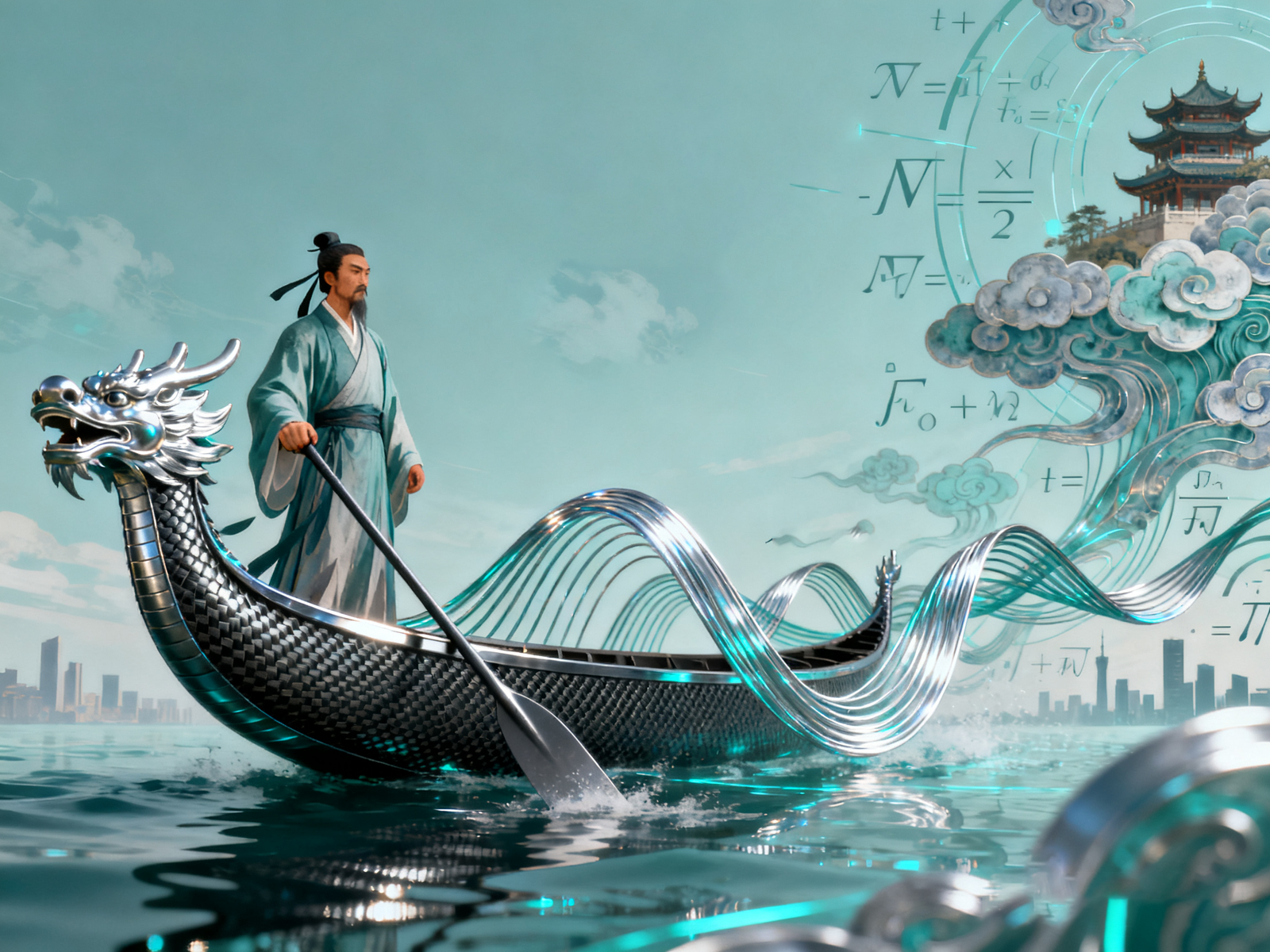
Chapter 1 — Building the Boat: Wood, Shape, Meaning
1.1 Wood that remembers the wind
Boat builders choose dense hardwood and “read” the grain—the wood’s story of storms and seasons. Strong grain helps the hull resist waves and keep its shape.
- Keel curve: a slight upturn at the bow helps the boat part the water.
- Paddle entry: ~15° keeps drag low and power clean.
- Length:width: ~6:1 balances speed and stability.

1.2 The dragon shape
The carved dragon head and tail connect the boat to older river beliefs about water, protection, and gratitude. Today they also say: we race hard, and we honor where it comes from.

Chapter 2 — Racing: Rhythm and Teamwork
2.1 The drummer’s beat
The drummer sets a steady pace—often 110–120 beats per minute—and calls changes for starts, sprints, and turns. When paddlers breathe with the drum, timing locks in and the boat feels lighter.
- Straights: hold a clean, even rate so the hull runs long.
- Turns: short bursts to pivot and re-accelerate.
- Power calls: simple words beat complex ones under pressure.
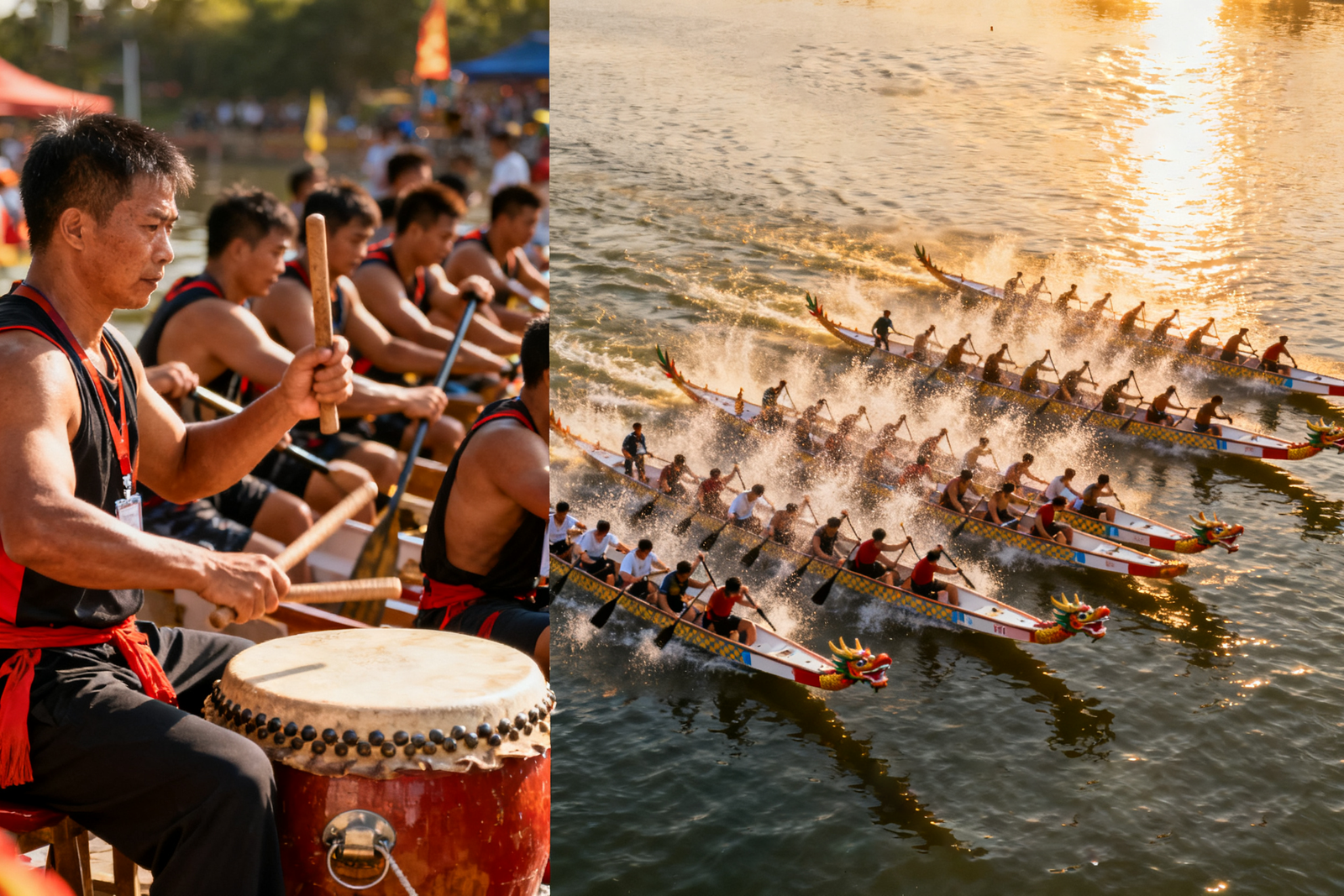
2.2 Paddles and feel
Teams test blade shapes and materials. Small tweaks—stiffness, shaft flex, and comfort—often matter more than raw force. Some clubs use simple sensors to see where power peaks.
- Clean entry, vertical shaft, firm exit—less splash, more run.
- Smoother wake saves energy; turbulence wastes it.
- Repeatable technique wins long races.
On shore you feel the race with all senses: drums in the chest, flags in the wind, boats flashing by. Many festivals mix sport with ceremony—eye-dotting the dragon head, blessing the water, thanking volunteers and elders.
Wherever you watch—village bridge, big-city regatta, or later on video—the question is the same: can many people move as one?
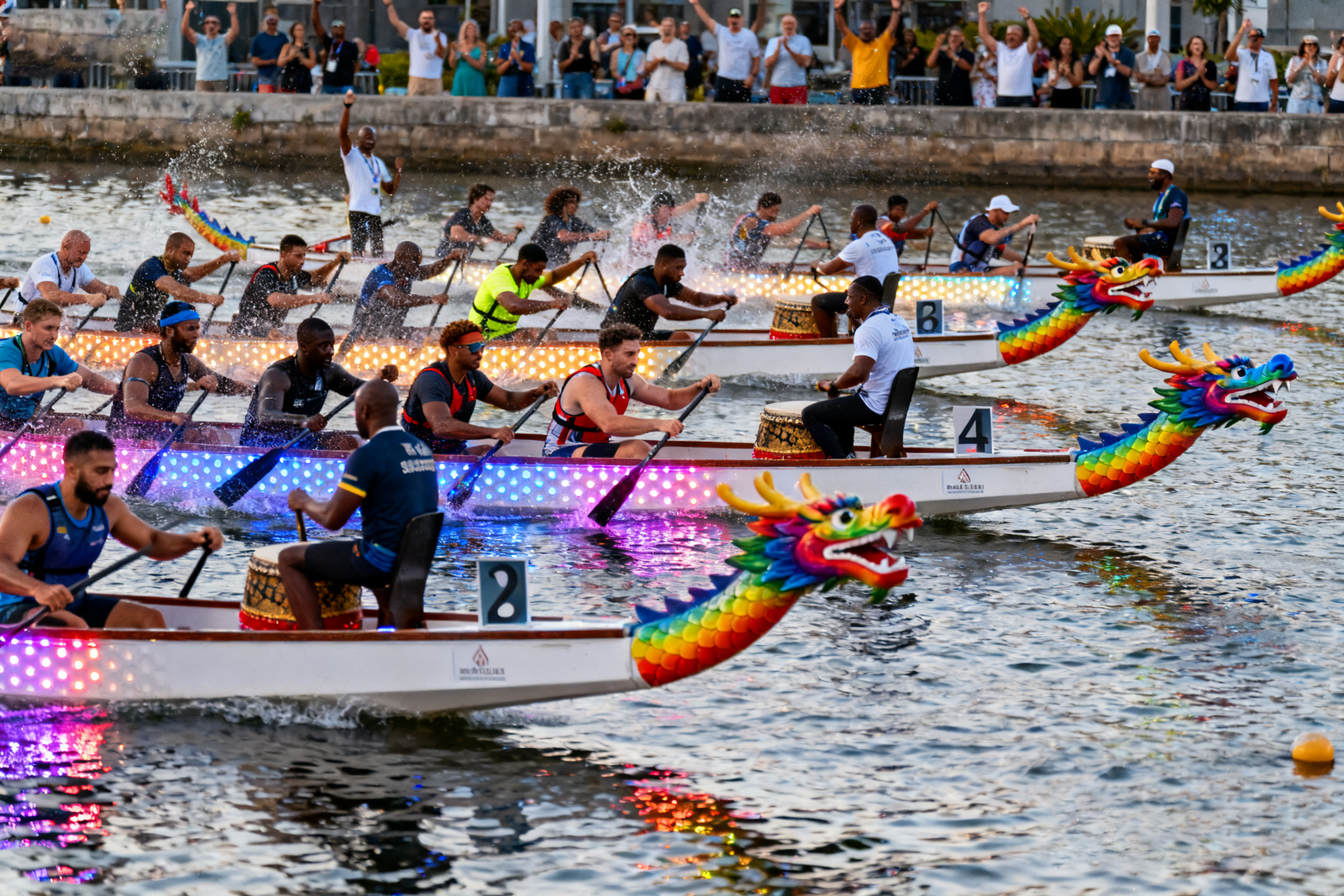
Chapter 4 — A Global Boat
South Africa
Mixed crews build trust at one shared pace—often better than speeches.
Germany
Precision helps—stroke rate, GPS, video—but kindness in the boat matters most.
Online & VR
Streaming and virtual drills add fun, but the heart stays on real water.
Finale — The Poetry of Power
What does a dragon boat really teach? That many small, honest efforts—timed together—make a light boat fly. Less about muscle, more about trust. Less about theory, more about practice.
Boat, drum, water, people. Strength with harmony. That’s the secret.