

Myth is not fantasy, but culture’s answer across time.
In Chinese tradition, myth does not seek to define what is real or unreal—
it seeks to reveal our relationship with the world.

Nüwa is not an all-powerful creator, but a goddess who responds to catastrophe by repairing the sky.
In Chinese mythology, heaven is not a flawless design, but a system that can crack—and be healed.
The cosmos is not static perfection, but a living process of constant balance and restoration.

Yu the Great did not defeat the flood—he redirected it.
In Chinese thought, water is not a force to conquer, but to coexist with.
Change, movement, and flexibility define the natural world.
The story of Yu reflects a worldview of harmony through understanding, not dominance.

Tudi Gong is one of the most beloved deities in China.
Earth is not an abstract element—it is a village, a dialect, a patch of soil with spirit.
In Chinese mythology, divinity resides in the familiar.
Local gods embody a worldview where the sacred is woven into daily life.

Chiyou, the defeated warrior god, is not a symbol of failure, but of resistance and raw power. Revered by minority cultures and feared by central dynasties, he represents the edge of legitimacy—where myth becomes memory and defiance becomes identity.
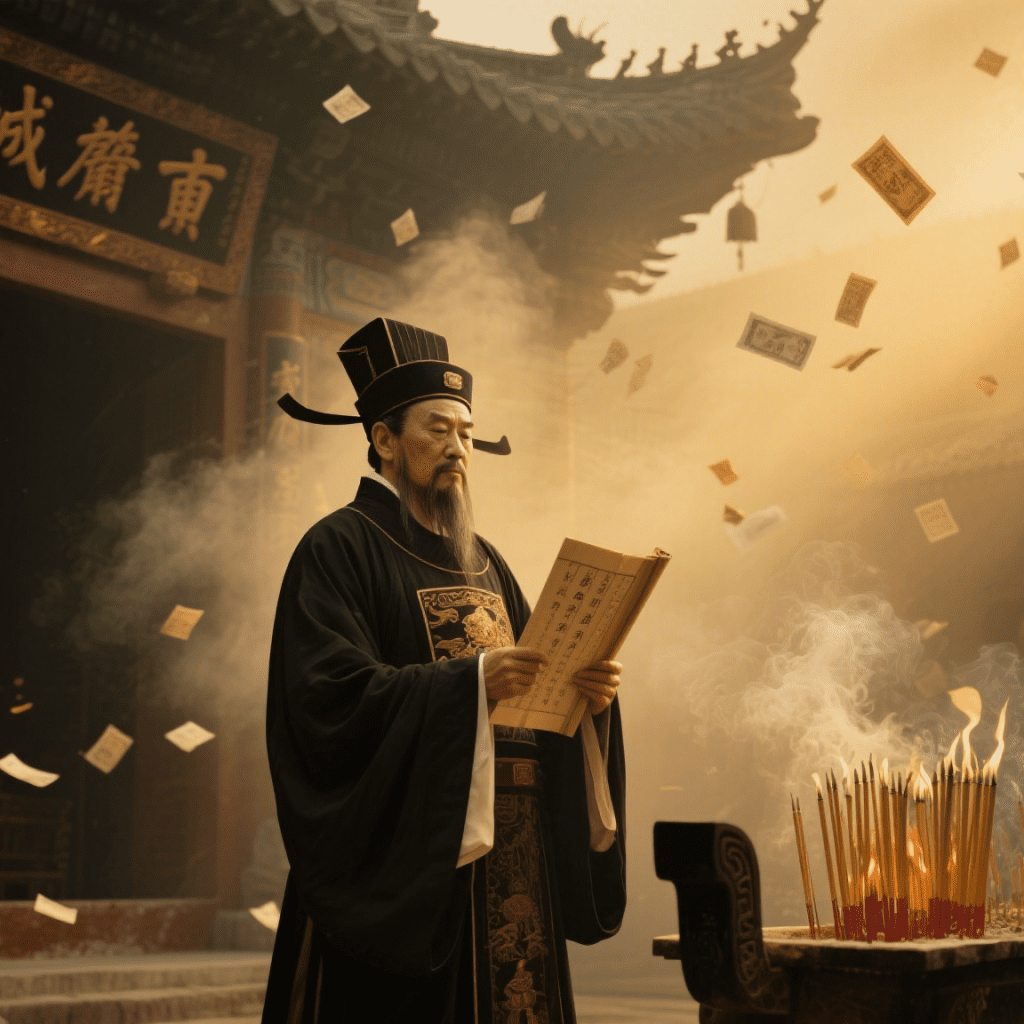
Chenghuang is no abstract figure of fear. He is a city’s moral center, judging spirits and sheltering citizens. With one foot in the spiritual world and one in the civic, he shows how Chinese polytheism is woven into public life, not just private belief.
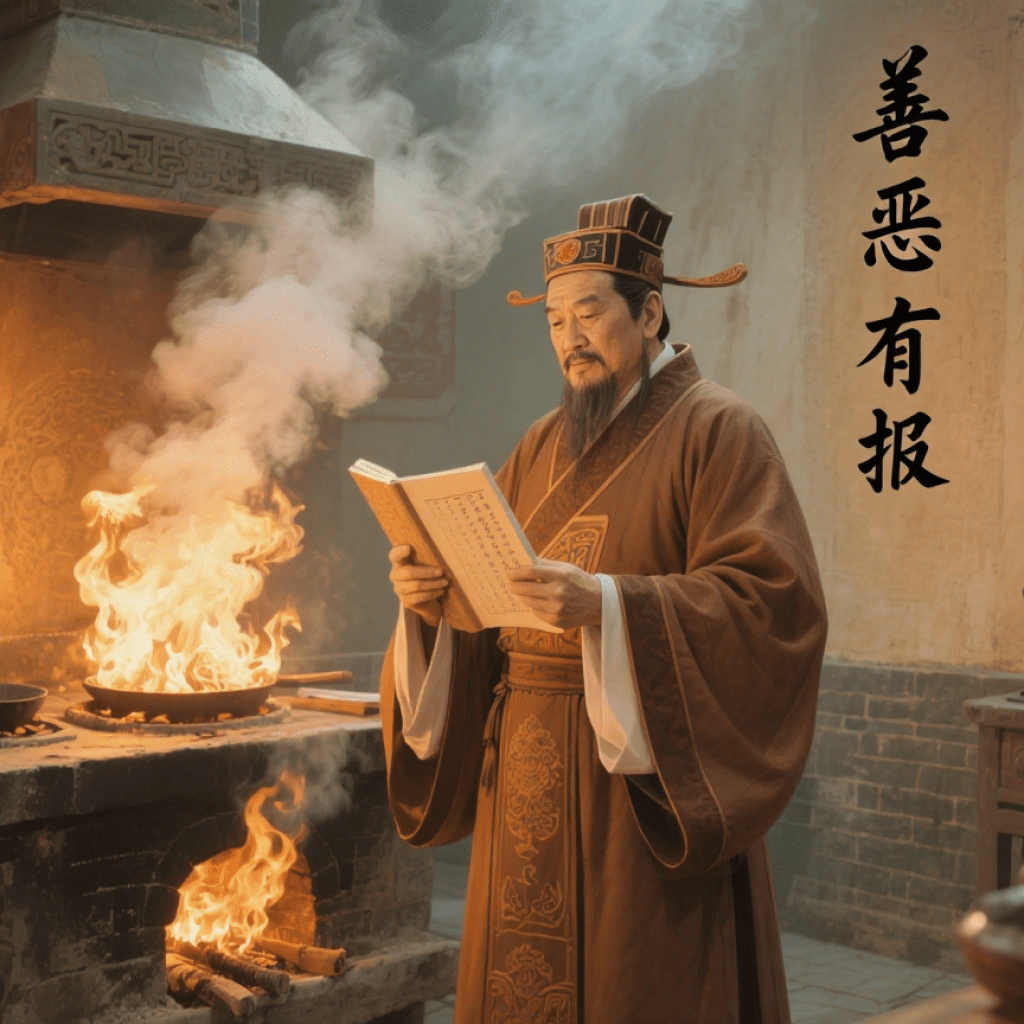
Zao Jun is not just a household deity—he is the moral memory of the family. Seated above the kitchen flame, he records not wealth or success, but virtue and wrongdoing. His annual report to the heavens reflects a worldview where domestic life is sacred, and the divine resides in everyday rituals like cooking and caring.

Mazu is not a conqueror of waves—she is a listener of prayers at sea. Born a mortal and remembered as divine, she accompanies travelers across oceans, not with force, but with calm assurance. She reflects a feminine spirituality where guidance, not control, is sacred.
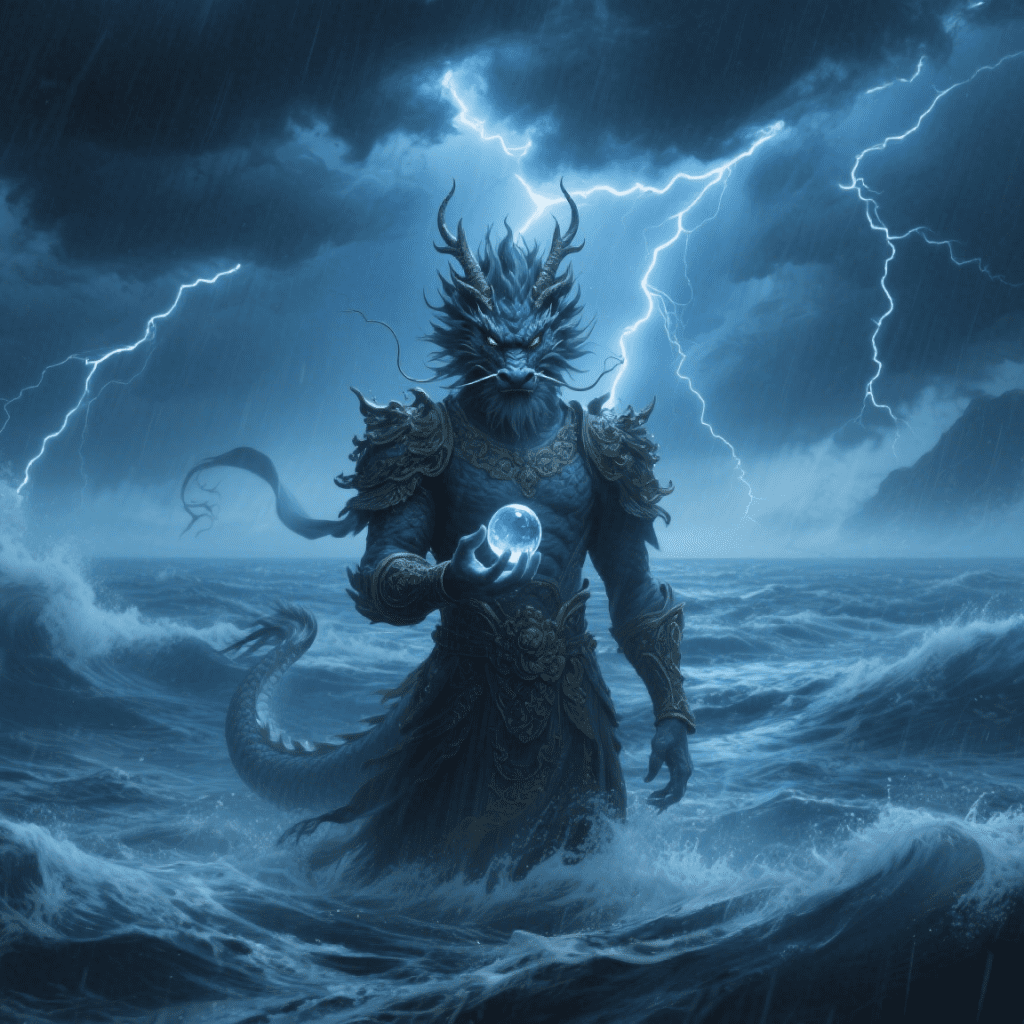
Long Wang is not a violent god of wrath, but a balancer of tides and skies. As master of rain and rivers, he reflects a Chinese understanding of nature: not as an enemy to dominate, but as a partner to harmonize with. He stands in the storm, not against it.
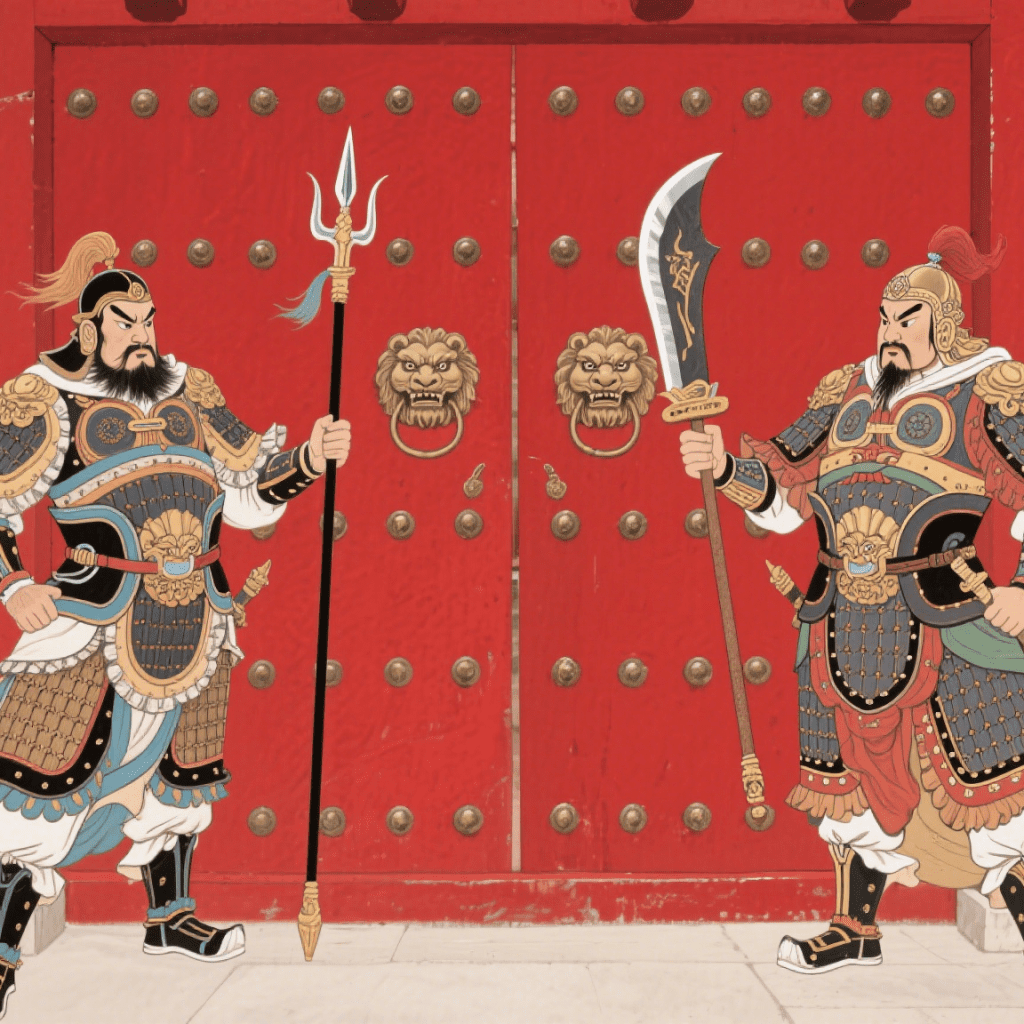
Men Shen, the Door Gods, are not warlords—but threshold watchers. They don armor not to expand territory, but to protect the quiet dignity of a home. Their presence on red gates reflects a spiritual architecture: guardianship as compassion, and boundaries as sacred.
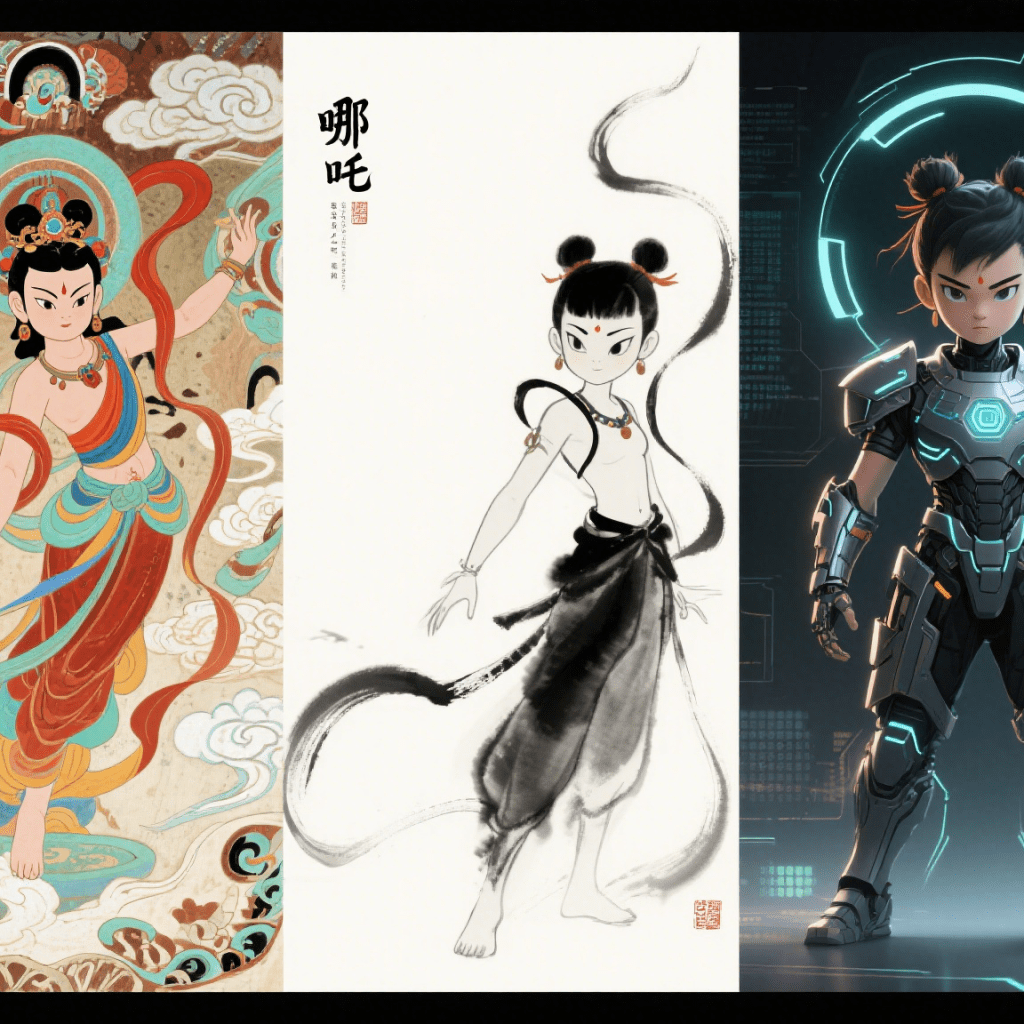
From Dunhuang’s celestial elegance to modern AI ink, to futuristic mech guardians — Ne Zha evolves as a cultural icon that transcends time and space.
This visual story is not just a stylistic journey, but a statement of belief: Chinese mythology doesn’t live in the past — it reinvents the future.
Every version tells why Ne Zha matters — as protector, rebel, and reimagined soul of youth.
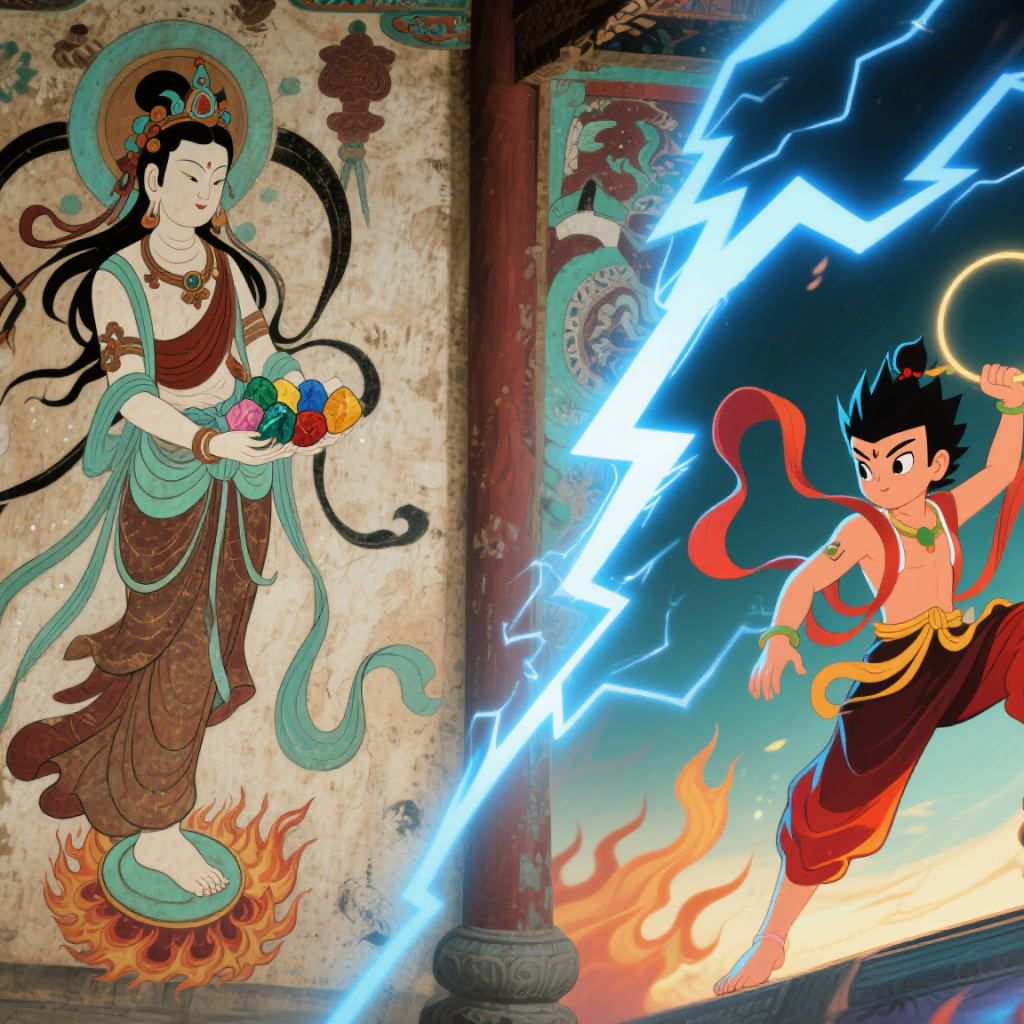
Traditional murals collide with lightning-charged animation.
Flying Apsaras and Ne Zha leap from temple walls into the gaming multiverse — pixelated, playful, powerful.
This is not just fan art. It’s cultural storytelling translated into a digital-first world — where gods wear pixels and ancient myths trend again.
Through color, fun, and motion, China’s myths speak globally — without losing soul.
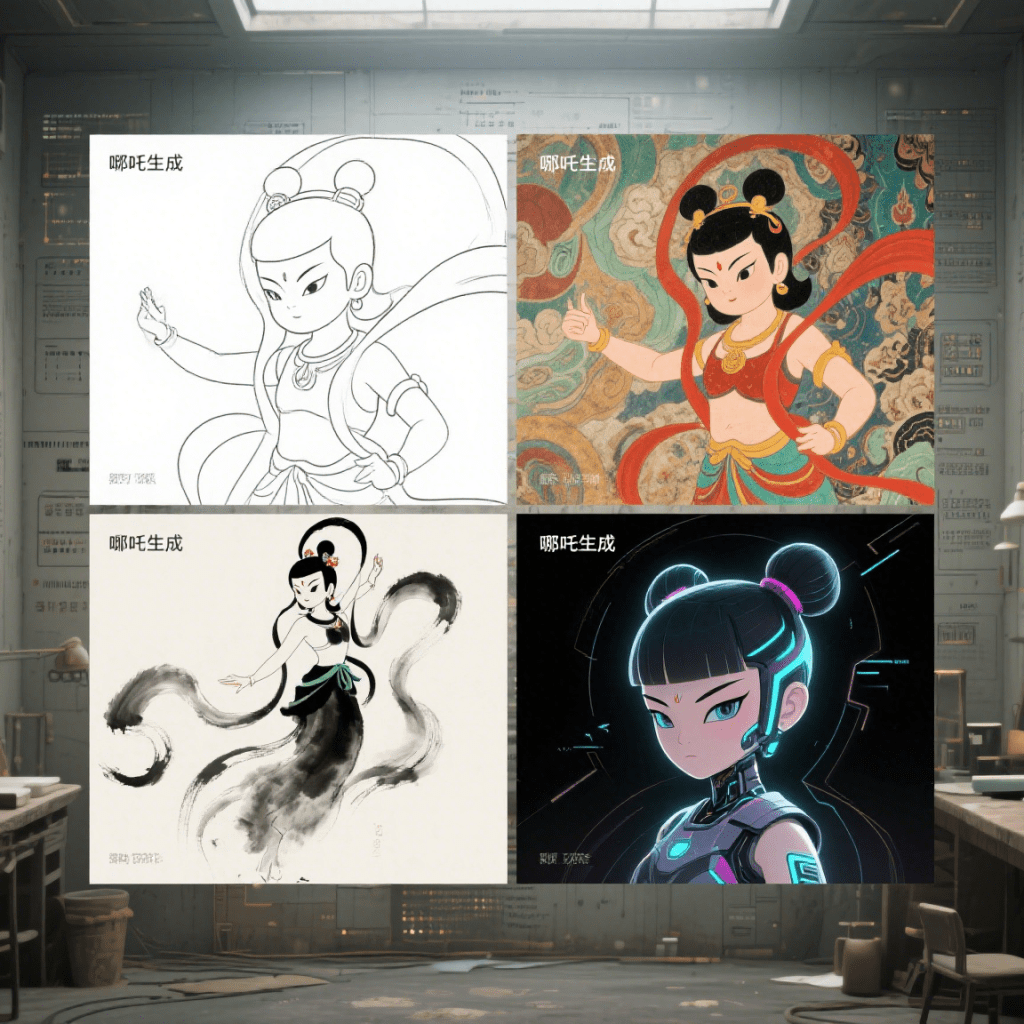
What does it mean to recreate a myth today? This 4-frame panel traces Ne Zha’s transformation — from sketch outline to traditional mural, from ink spirit to digital warrior.
It’s not about copying style — it’s about uncovering meaning beneath form.
Each version speaks to a different audience, yet all share the same emotional core: courage, rebellion, protection.
This is cultural translation in action — not just design, but a global dialogue through image.
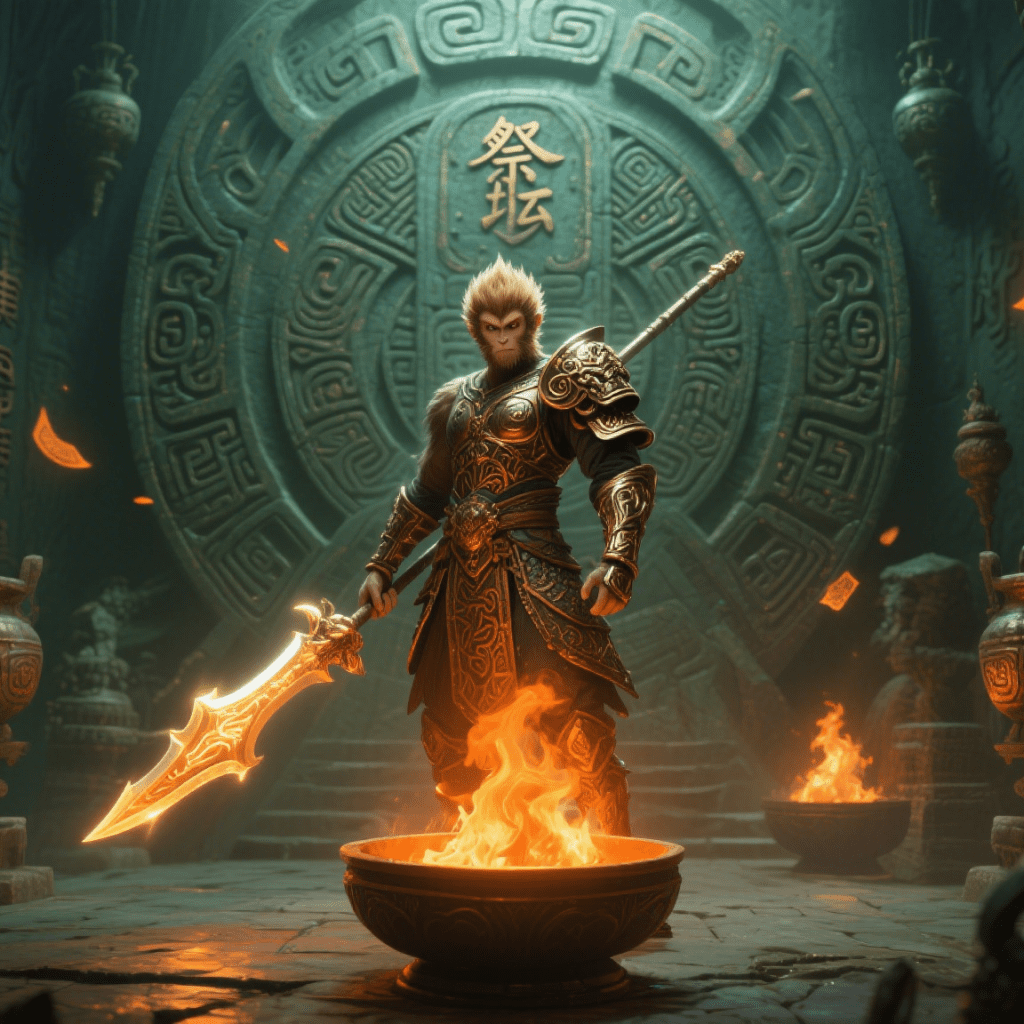
Sun Wukong in an ancient temple, holding a glowing fire blade, surrounded by mystical relics.
From epic rebellion to spiritual pilgrimage, Sun Wukong has always stood at the edge of mythology and moral reflection.
Here, he returns not just as a fighter, but as a guardian of cultural consciousness — forged in fire, shaped by faith, and reborn for the global stage.
This is not just Chinese folklore, it’s a hero reimagined for the world to understand.
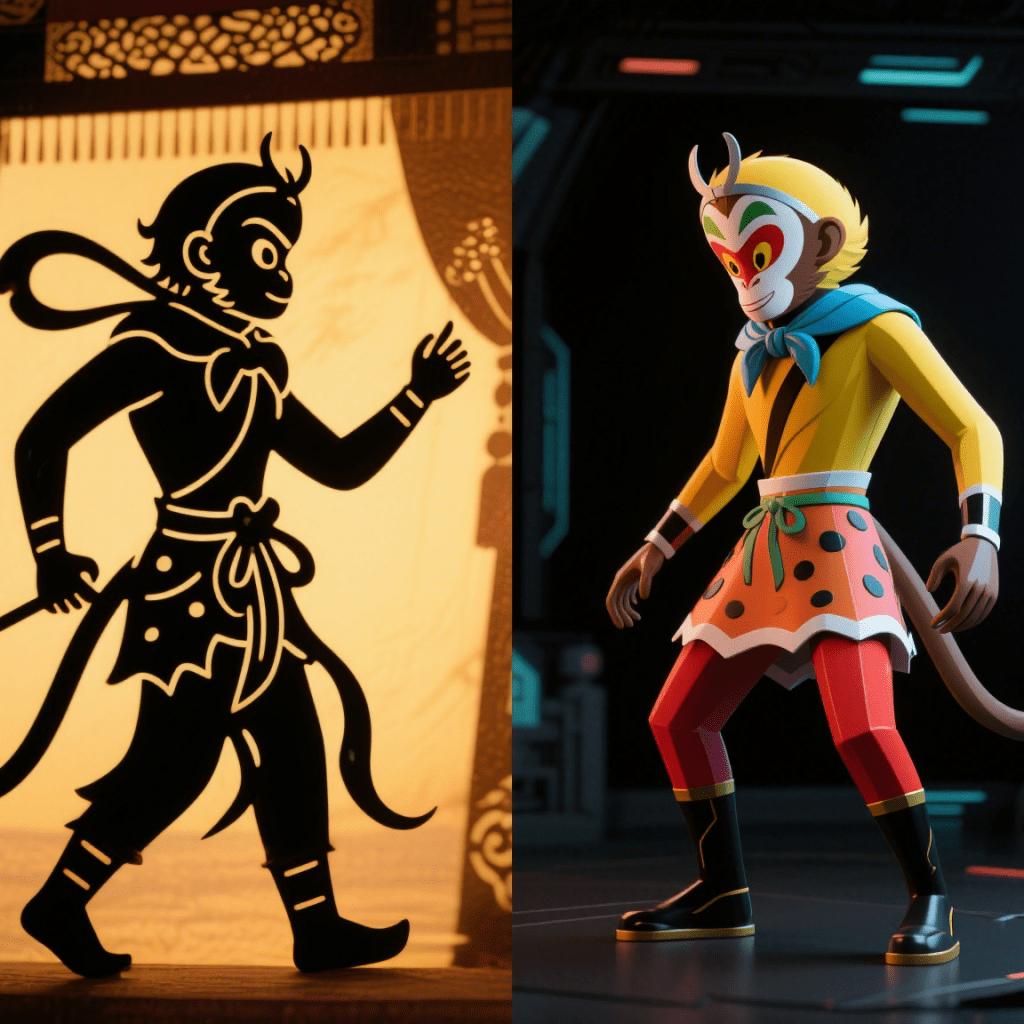
A shadow puppet figure of Monkey King paired with a futuristic 3D-rendered version of the same character.
China’s storytelling traditions don’t just survive — they evolve.
The poetic simplicity of shadow puppetry once danced across candle-lit walls; now it echoes in digital universes.
This juxtaposition reminds us: innovation is not departure from heritage, but its continuation in new form. Culture speaks when generations collaborate.
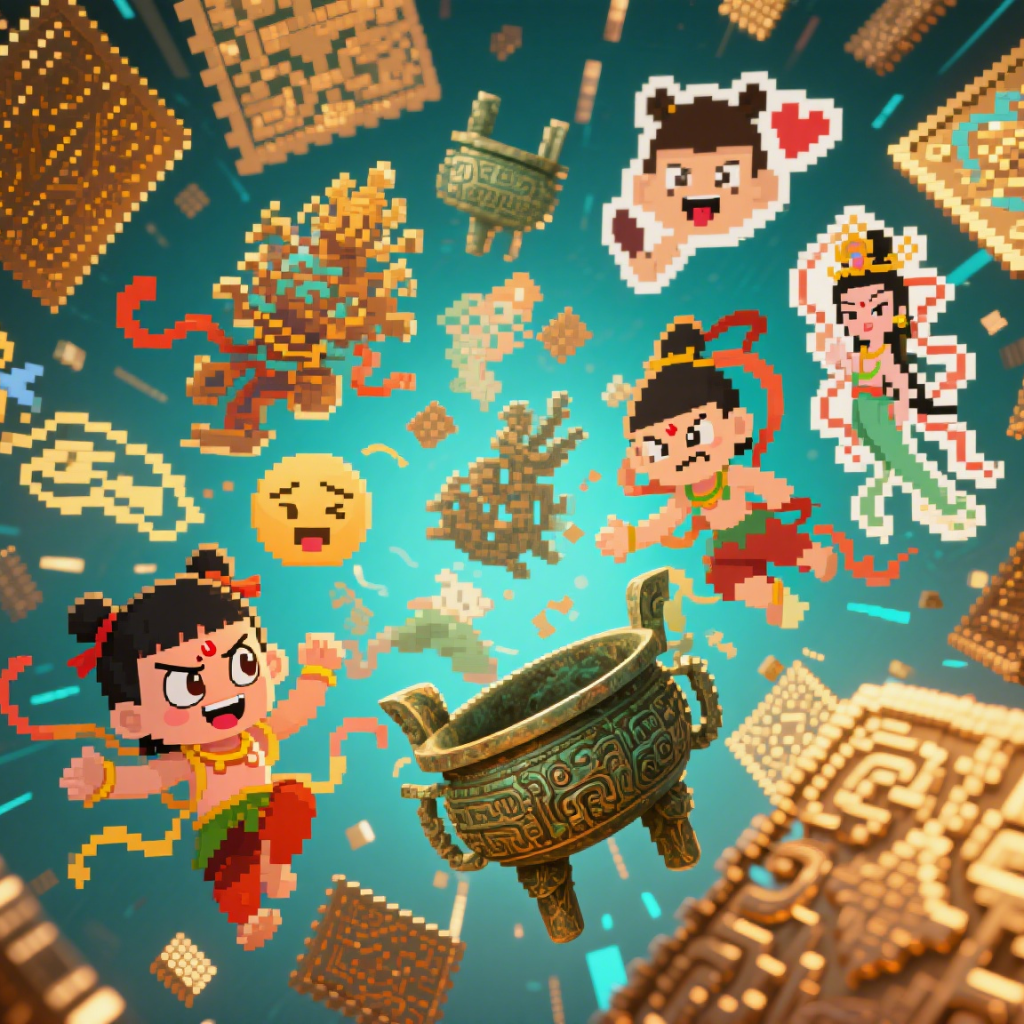
Pixelated characters inspired by Chinese legends flying through a cyber world filled with bronze relics and emojis.
Heritage is not confined to museums. It leaps, laughs, and lives — even in pixels.
In this playful reinterpretation, digital aesthetics collide with bronze-era relics and emoji-era expressions.
The result? A visual playground where tradition becomes emotion, and culture becomes connection.