


Amber, Gold & Starlight: The Cantonese Siu Mei Roast Trio (Char Siu · Roast Goose · Siu Yuk)
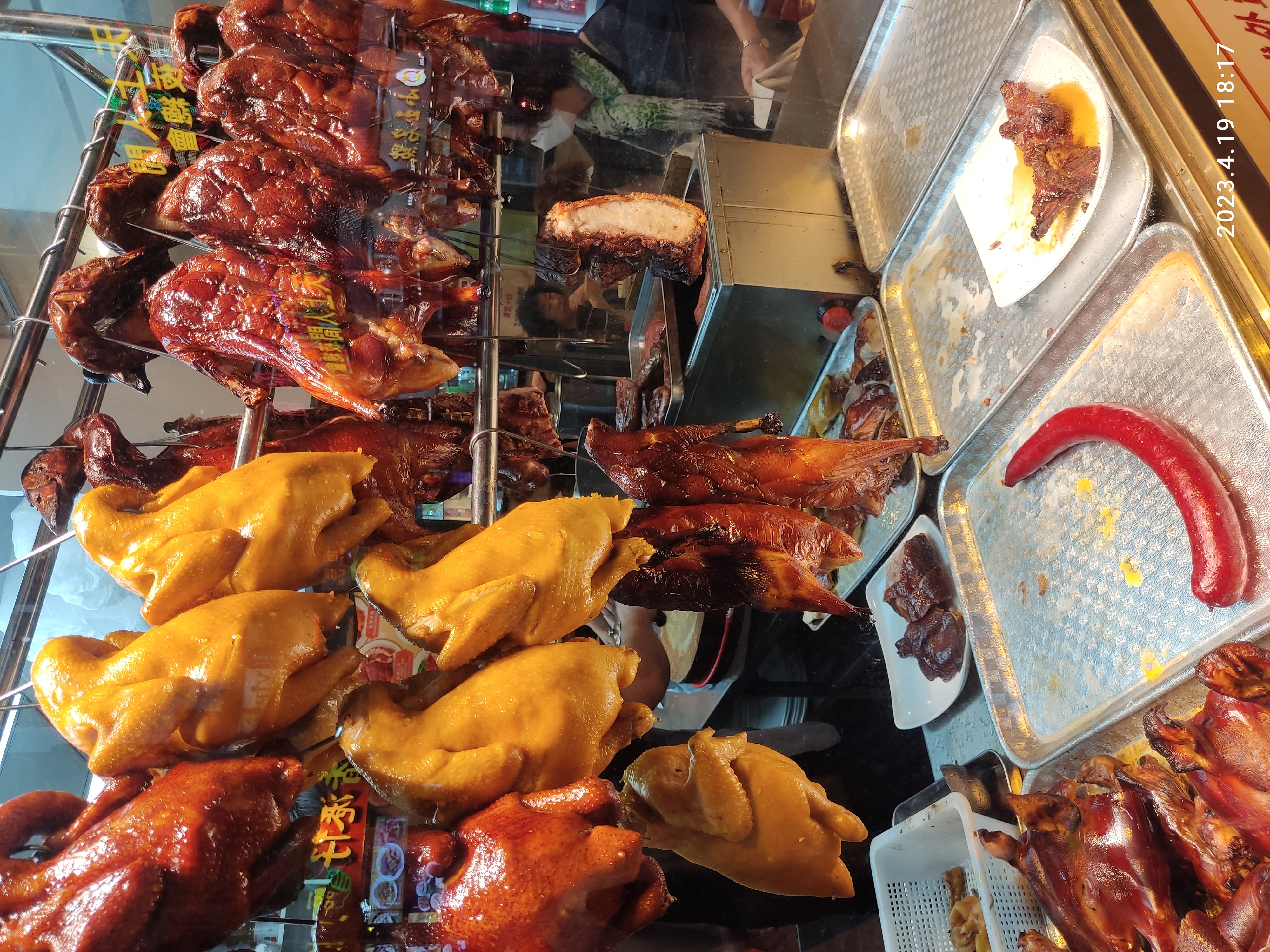
At first light, the cleaver’s tak-tak sets the rhythm in a Cantonese roast shop. Three glints catch the eye: the amber glaze of char siu, the gilded sheen of roast goose, and the jewel-crackle on siu yuk (crispy roast pork belly). Together they form a culinary triptych that has evolved with the Pearl River Delta’s markets, trade winds, and relentless pursuit of texture.
I. Char Siu — the city’s sweet confession

Cut. Use collar/neck/shoulder butt (often called “pork collar” or “pork neck”), with about 30% fat to 70% lean. The fine intramuscular fat melts into the grain, giving that tender, bouncy chew.
Marinade (baseline for 1 kg / 2.2 lb meat). Light soy (60–70 ml), sugar or maltose (40–50 g), nam yu (red fermented bean curd, ~1 cube per 500 g meat; adjust by brand), rice wine (1–2 tbsp), a touch of five-spice and white pepper. Refrigerate 8–24 hours. Pat dry before roasting.
Roast, two-stage. Roast on a rack at 160–180°C (320–355°F) until fat renders and the meat is ~75–80% done, flipping once or twice for even color. Brush a syrup of maltose/honey thinned with a little hot water and a splash of vinegar; then finish briefly at 210–230°C (410–445°F) for a translucent amber lacquer. Target centre temp ≥ 70°C/158°F (see safety notes below). Rest 5–10 minutes; slice along the grain for thicker, juicy slabs.
Why it shines. The gloss is the duet of Maillard reactions (amino acids + reducing sugars) and caramelization of the syrup layer; salt-sugar balance—not secondary fermentation—drives the signature “clean sweet” finish.
II. Roast Goose — the golden rite of the banquet

Bird & spec. A mature meat goose of about 4–6 kg with a 2–3 cm subcutaneous fat layer gives the best balance of crisp skin and succulent meat.
Skin work. Scald with ~90°C water to tighten pores; gently inflate the skin (air between skin and flesh) so it crackles rather than shrinks; brush a “skin syrup” (maltose + vinegar or liquor), then air-dry 12–24 hours (fridge with a fan or a cool, ventilated space).
Roast, two-stage. Start at 180–200°C (355–390°F) until fat renders and the skin tightens; finish at 220–240°C (430–465°F) to set a “glass-crisp” crust. Rest 15–20 minutes for juices to settle. Classic service is with plum sauce; the pancake-and-wrap style is a modern crossover, not the Cantonese norm.
Why it crackles. Dried skin plus high heat = fast evaporation on the surface and rapid collagen contraction, creating that brittle, shattering shell while the thick goose fat bastes from within.
III. Siu Yuk — the people’s explosive aesthetic

Prep. Choose mid-section pork belly with balanced layers. Prick the rind densely—about 3–5 holes/cm², piercing to the fat but not the meat. Rub salt and a splash of rice wine; leave the rind side uncovered to air-dry 12–48 hours (refrigerated). A wipe of vinegar on the rind accelerates surface dehydration.
Roast, stepped crackling. Cook through at 160–180°C (320–355°F) until centre ≥ 70°C/158°F. Then crackle in two short bursts: 220°C (428°F) for ~15 min + 230°C (446°F) for ~5 min (watch closely). The rind will blister into “star-dust” bubbles. Rest and cut along the grain into 2–3 cm bites so each mouthful hits rind-fat-lean in sequence.
Why it pops. Microscopic steam pockets form under a thoroughly dried, collagen-rich rind; the brief high-heat pulses expand and set the bubbles into audible glassiness.
Quick reference (temperatures & cues)
| Dish | Oven strategy | Key steps | Safety target* |
|---|---|---|---|
| Char siu | 160–180°C, then 210–230°C finish | Flip 1–2 times; syrup glaze before finish | Centre ≥ 70°C/158°F |
| Roast goose | 180–200°C, then 220–240°C finish | Scald → inflate skin → syrup → 12–24 h dry | Centre ≥ 74–75°C/165–167°F (poultry) |
| Siu yuk | 160–180°C cook-through; crackle 220°C + 230°C | 3–5 holes/cm²; rind dried; two-step crackle | Centre ≥ 70°C/158°F |
*Use a clean, calibrated probe thermometer. See safety references below.
Science notes (plain-English)
- Glaze & color: Maillard reactions plus caramelization build char siu’s amber sheen.
- Crisp skin physics: Goose and pork skins crisp when surface water is driven off and collagen tightens; prior drying is non-negotiable.
- Dry-brining effect: Salting ahead improves seasoning depth and helps surfaces brown faster.
History & culture, briefly
“Siu mei” (Chinese barbecued meats) is both street-side staple and banquet centrepiece in Cantonese cities. Its everyday face is the roast window—where a single queue yields a thousand dinners; its ceremonial face is the goose: carved, sauced, shared. Trade, migration, and restaurant craft shaped the genre into what we taste worldwide today.
FAQ
How is Cantonese roast goose different from Peking duck? Goose aims for glass-crisp skin with juicy meat around 74–75°C/165–167°F; Peking duck traditions tolerate a higher finish (very tender meat, skin served separately). Serving format and sauces also differ (plum sauce vs. sweet bean sauce).
Practical safety & storage
- Keep raw and cooked items strictly separate (boards, knives, trays).
- Cook to the safe minimum internal temperatures listed above.
- Refrigerate leftovers under 4°C/40°F and enjoy within 24 hours. Reheat thoroughly.
References & further reading (English)
- Hong Kong Tourism Board. Char siu: learn to make Hong Kong’s sweet barbecued pork. discoverhongkong.com.
- Food Standards Agency (UK). Cooking your food: time/temperature guidance. food.gov.uk. Complemented by US guidance at foodsafety.gov.
- Centre for Food Safety, HKSAR. Microbiological Risk Assessment of Siu-Mei and Lo-Mei. PDF: cfs.gov.hk.
- Serious Eats (J. Kenji López-Alt). Crisp-Skinned Roast Goose and Gravy. seriouseats.com.
- Wikipedia editors. Siu mei. Overview of styles and dishes. en.wikipedia.org.
- Hong Kong FEHD. Siu Mei / Lo Mei illustrated glossary (product categories). fehd.gov.hk.

Comment (0)