Dumplings Before Parting, Noodles When You Return
Jiaozi for departures, longevity noodles for homecoming, and the greeting “Have you eaten?” — how food becomes China’s most direct language of care.

Part 1 — Dumplings for Departures: A Full-Circle Blessing
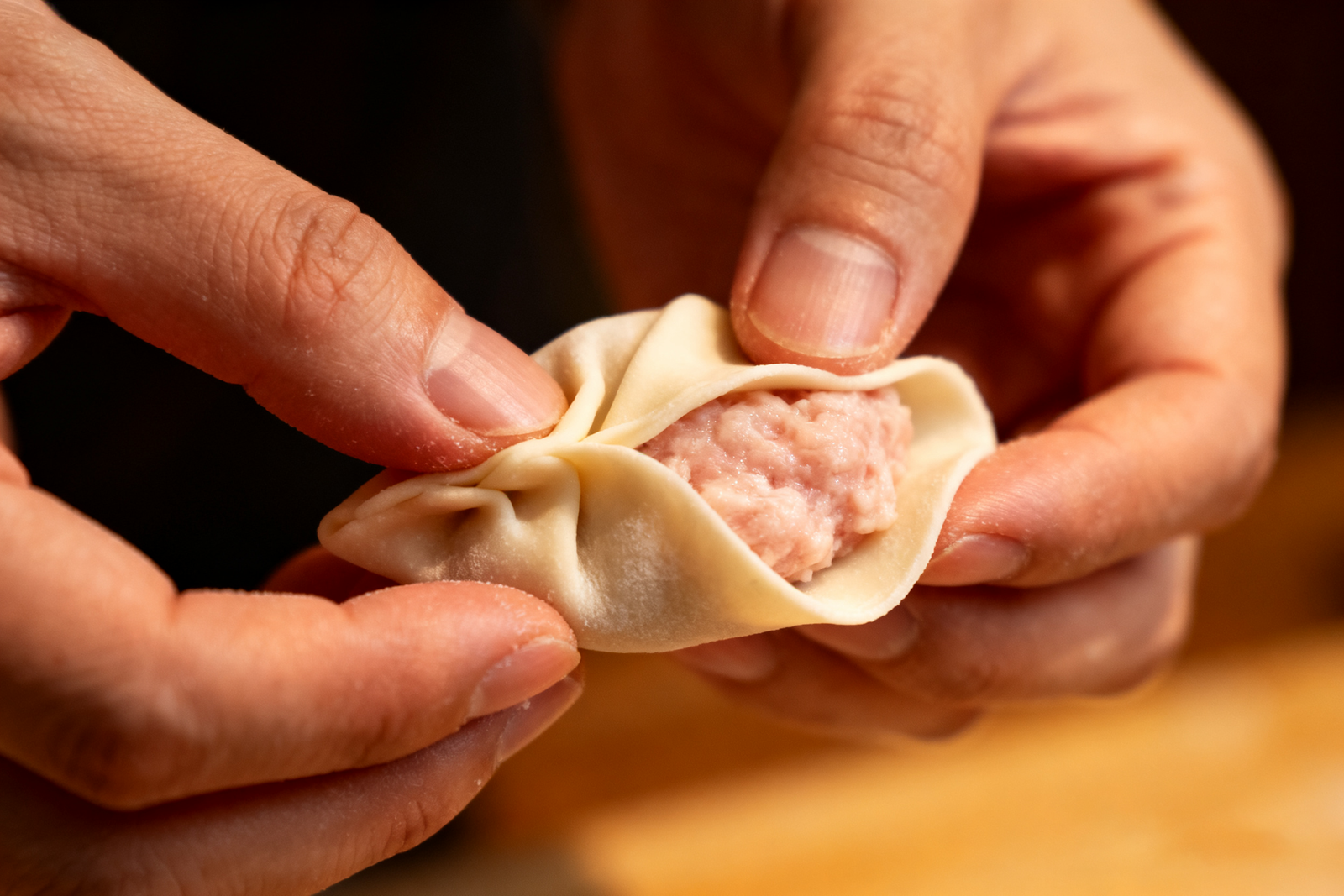
Shape speaks. Dumplings—jiaozi (jiǎozi)—curve like ancient silver ingots, yuanbao (yuánbǎo). Families read that shape as a quiet wish for fortune, safety, and a successful journey. The making itself matters: rolling, filling, sealing. Each pinched edge feels like tucking care into a pocket you can carry.
Warmth has a purpose. Hearty fillings travel well, and the hot broth after boiling dumplings is traditionally thought to warm the stomach and ease the chill of travel (a common traditional view). It’s practical tenderness.

Part 2 — Noodles for Homecoming: The Unbroken Thread
Length is legacy. Homecoming often means noodles—chángshòu miàn (“longevity noodles”). The long, unbroken strand signals continuity, long life, and smooth return. After disjointed days on the road, a single long line says, “You’ve rejoined the thread of home.”
Texture restores. Welcome-home noodles are usually gentle—light broth, quick stir-fry—soothing but substantial. Food cooked by someone who missed you tastes different—because it carries relief.


Part 3 — “Have You Eaten?”: From Scarcity to Solidarity
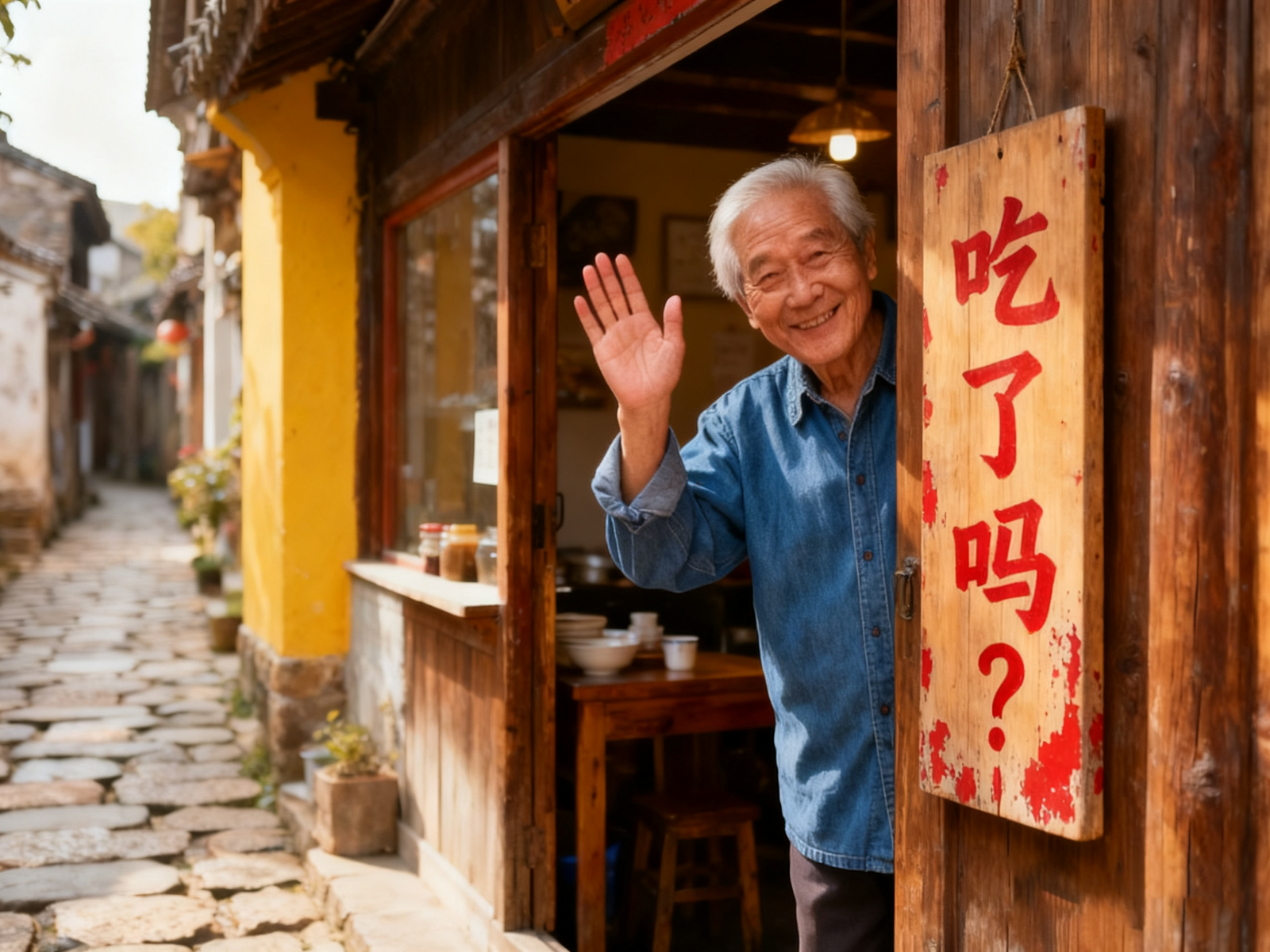
A greeting with history. For long stretches of China’s past, food security was uncertain. Asking “Have you eaten?” once checked basic wellbeing. With prosperity, the phrase softened into everyday care—closer to “Are you doing okay?” than a literal dinner invite.
Today’s nuance. In big cities, strangers rarely greet each other this way now; among neighbors, elders, and familiar shopkeepers, it remains a warm shorthand for I see you.

FAQ
Is “dumplings before leaving” universal across China?
It’s widespread in the north; in the south you may see wontons, tangyuan, or rice noodles mark the moment.
Do people still say “Have you eaten?” to strangers?
Less common in large, fast-paced cities. You’ll still hear it among acquaintances and in local communities as a gentle check-in.
Is the “hot soup warms the body” note scientific?
It reflects traditional cultural views about warming the body and easing travel fatigue; treat it as cultural practice, not medical advice.
Related · Living with Time
Time as flow and balance across rituals and seasons.
Further reading (selective)
- Joseph Needham, Science and Civilisation in China, Vols. III–IV.
- K. C. Chang (ed.), Food in Chinese Culture.
- UNESCO ICH: The Twenty-Four Solar Terms (2016).
- On early noodles (e.g., Lajia site): see standard academic overviews.
Note: “Zhang Zhongjing & jiaozi” is a widely circulated traditional account; presented as cultural memory, not sole historical origin.

Comment (0)